You book a $2,000 trip, budget carefully, then get home to a statement that is $60 heavier than you expected. No warning, no line item you agreed to. That is the foreign transaction fee, and almost every ordinary debit card charges it.
The good news is you can avoid most of it. A debit card with no foreign transaction fee is one that does not add a percentage surcharge when you spend in a foreign currency, and a smarter version of the same idea is a card that holds your money in dollars so there is nothing to convert.
This guide explains what the fee really is, the two other charges people confuse it with, what to look for in a card, and how a dollar-based card like Kite cuts the cost. It is written by the team that builds Kite, so we will be straight about where our own card saves you money and where it does not.
What is a foreign transaction fee?
A foreign transaction fee is a surcharge your bank or card issuer charges whenever you make a purchase in a currency other than your card’s home currency. It usually runs 1% to 3% of the purchase, and most issuers charge a flat 3%.
It applies more often than people realise. Tap your card at a cafe in Bangkok, and you pay it. Buy from an overseas website priced in euros while sitting at home, and you pay it there too. The trigger is the currency, not your location.
Say you spend $3,000 across hotels, food, and shopping on a card with a 3% fee. You basically hand over $90 for nothing in return plus other fees like FX.
For frequent travellers and anyone who shops on international sites, that 3% becomes a steady leak. Cutting it is one of the easiest wins in personal finance.
Three charges people confuse
Travellers lump three separate charges into one word, then pick the wrong card to fix the wrong problem. They are
- The foreign transaction fee
- The foreign ATM fee
- Dynamic currency conversion
| Charge | Who adds it | Typical cost | How to avoid it |
|---|---|---|---|
| Foreign transaction fee | Your card issuer | 1% to 3% | Use a card that does not charge one, or spend a dollar balance |
| Foreign ATM fee | The ATM operator, plus sometimes your bank | A flat fee per withdrawal | Withdraw larger amounts less often, use fee-reimbursing or in-network ATMs |
| Dynamic currency conversion (DCC) | The shop or ATM | 3% to 12% markup | Always choose to pay in the local currency |
That third one is the sneakiest. Dynamic currency conversion is when a foreign card machine offers to charge you in your home currency instead of the local one. It sounds helpful but it is not. The merchant sets the exchange rate and adds a markup of 3% to 12%.
So you can hold the best no-fee card in the world and still get fleeced if you tap “yes, charge me in dollars” at the terminal. The traveller rule is to pay in the local currency, every time.
What to look for in a no-fee card
A genuinely cheap card for foreign spending does more than waive the transaction fee. Five things separate a good travel card from a card that just markets itself as one:
- The foreign transaction fee itself. Look for 0%, or a rate clearly below the standard 3%. Read whether it applies to all foreign spends or only some.
- The exchange rate used. A 0% fee on a padded exchange rate is not a deal. The card should use a fair network or market rate, not a marked-up one.
- Card fees. Check for issuance fees, monthly fees, and annual fees. A “free” foreign spend means little if the card costs $10 a month to hold.
- ATM access abroad. Can you withdraw cash, and what does it cost? Some cards reimburse ATM fees, some block withdrawals in certain countries.
- Who controls the money. With most cards a bank holds your funds. With a non-custodial wallet, you do. That control matters if an account ever gets frozen.
The honest truth is that no single card wins on all five for every person. A card built around a dollar balance, though, has a structural advantage. If your money is already in dollars, a large share of your spending never converts at all.
How the Kite stablecoin card handles foreign spending
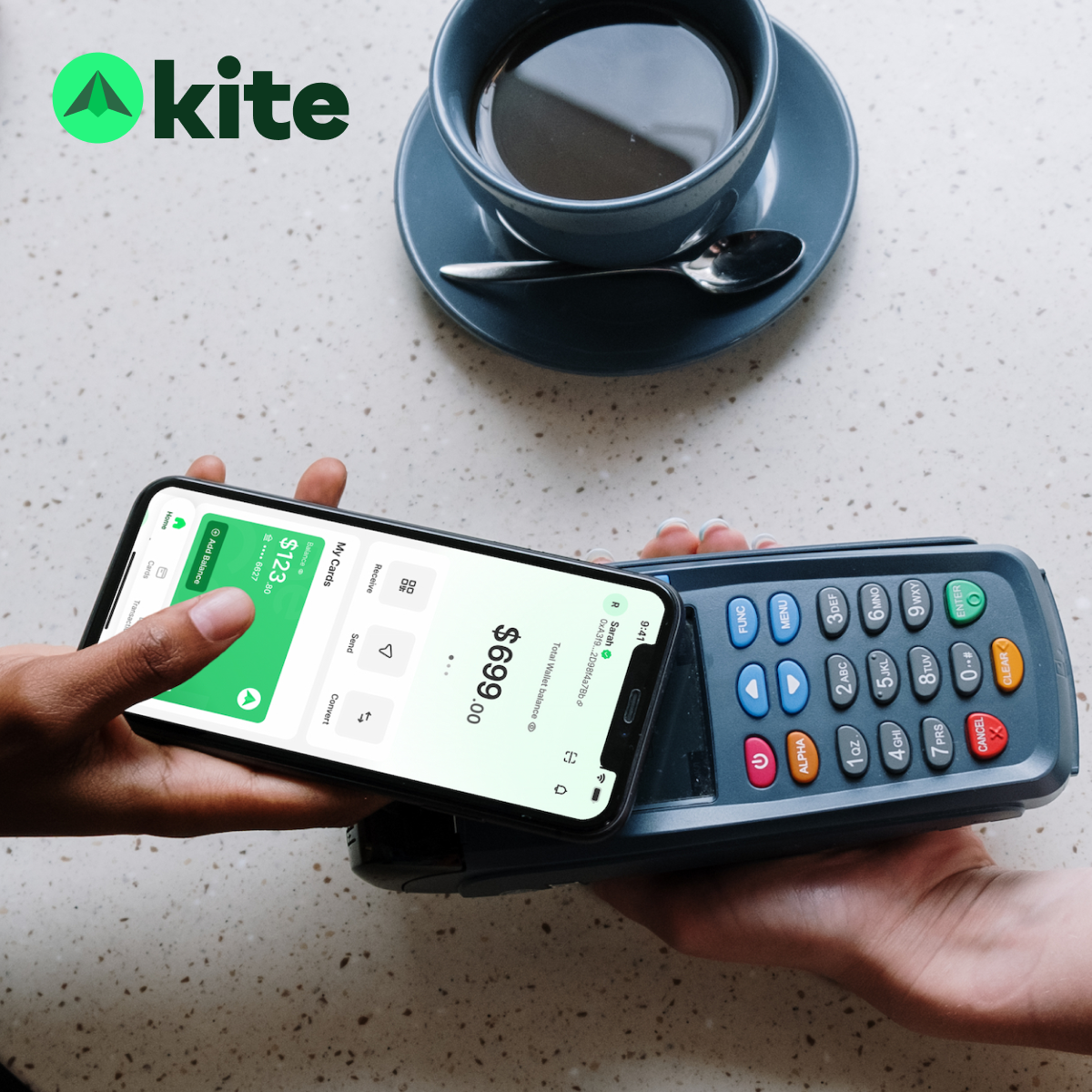
Kite provides prepaid Visa cards that you load with stablecoins (USDC or USDT) from your Kite wallet. Once loaded, the balance sits in US dollars, and you spend it anywhere Visa is accepted. Spends in USD carry no added fee. Spends in another currency cost 1.8%, which is below the typical 3% bank charge, and card issuance is free.
We will not pretend it is a magic 0% card on every purchase, because that would be a lie and you would find out at the till.
| What you pay | Typical bank debit card | Kite card |
|---|---|---|
| Foreign transaction fee | ~3% on every foreign spend | 0% on USD spends, 1.8% on non-USD |
| Card issuance and maintenance | Varies, sometimes monthly fees | Free |
| Loading or topping up | Not applicable | 0.53% to move stablecoins onto the card |
| Network or gas fees | Not applicable | Covered by Kite, you never pay gas |
| Who holds your money | The bank | You, the wallet is non-custodial |
The reframe is the whole point. A normal debit card keeps your money in your home currency and charges you 3% every time you cross into another one. Kite keeps your money in dollars. When you buy something priced in dollars, online or from a dollar merchant, there is no conversion and no fee. When you do spend in a local currency, the 1.8% is lower than what your bank charges, and you already skipped your bank’s hidden conversion when you funded the card with stablecoins.
As of launch, the card is available to residents of:
- Australia
- Malaysia
- Philippines
- Singapore
- Thailand
- Vietnam
- Taiwan
- Japan
- South Korea
How to avoid foreign transaction fees abroad
You can cut most foreign card costs with habits, no matter which card is in your pocket. The single biggest saving is refusing dynamic currency conversion. The rest is about choosing the right card and using cash smartly.
- Always pay in the local currency. When a terminal or ATM asks whether to charge you in your home currency, say no. Choosing the local currency lets the card network set the rate and dodges the 3% to 12% DCC markup.
- Carry a card with a low or zero foreign transaction fee. Do not discover your card’s 3% fee on the statement. Know it before you fly.
- Hold a dollar balance when you can. If your money is already in dollars, dollar-priced purchases skip conversion entirely. This is the structural edge of a card like Kite.
- Withdraw cash in larger, less frequent amounts. Flat ATM fees hurt most on small, repeated withdrawals.
Built for on-the-move life in Asia
Most “best card for travel” lists are written for Americans and recommend US bank accounts. That is useless if you live in APAC (the favorite region for digital nomads) and cannot open one. Kite is built the other way around, for people whose lives already cross borders across Asia.
A freelancer in the Philippines paid in dollars can hold those dollars, spend them on a Visa card, and skip converting to pesos and back. A worker sending money home moves stablecoins to family in minutes, with Kite covering the network gas fee, instead of paying a remittance counter 5% and waiting days.
Store it, spend it, grow it
A card is one part of the picture. Avoiding the foreign transaction fee matters most when the card sits inside a wallet that does the rest of the job, holding your dollars safely and putting them to work. Kite is a stablecoin money app, not just a card.
Three things sit behind the card.
- Store. Your USDC and USDT live in a non-custodial wallet, which means you control the funds and Kite cannot move or freeze them. One address works across six networks, including Base, Ethereum, and Polygon.
- Send and spend. Send stablecoins to anyone in minutes with the gas fee on us on select networks and spend your balance on the Visa card anywhere it is accepted.
- Grow. Make money work for you. Coming soon, will let you earn yield on idle USDC and USDT through established on-chain lending protocols, with rates that have reached up to 9% a year. Your funds stay non-custodial and you can withdraw anytime.
So the dollars you protect from foreign transaction fees do not just sit there. You hold them, you spend them at a fair cost, and soon you can earn on them too.
Join Kite today. Hold your money as digital dollars, and spend it on a Visa card with no fee on dollar spends and a low rate everywhere else.
Frequently asked questions
Do debit cards charge foreign transaction fees?
Most do. A typical debit card adds a foreign transaction fee of 1% to 3%, most often a flat 3%, whenever you spend in a currency other than the card’s home currency. A smaller number of cards waive it, and dollar-based cards avoid it on dollar purchases because no conversion takes place.
What is a good foreign transaction fee?
Anything clearly below the standard 3% is good. Just check the exchange rate too, since a 0% fee on a marked-up rate can cost more than a small fee on a fair rate. Kite charges 0% on USD spends and 1.8% on other currencies, against a typical bank’s 3%.
How do I avoid foreign transaction fees on a debit card?
Carry a card with a low or zero foreign transaction fee, hold a dollar balance so dollar purchases skip conversion, and always choose to pay in the local currency at terminals and ATMs. That last step avoids dynamic currency conversion, which can add a 3% to 12% markup on top of any card fee.
What is the difference between a foreign transaction fee and a currency conversion fee?
A foreign transaction fee is charged by your card issuer for spending in another currency. A currency conversion fee usually refers to dynamic currency conversion, where the merchant or ATM does the conversion and adds its own markup of 3% to 12%. You avoid the second one by always paying in the local currency.
Should I pay in local currency or my home currency abroad?
Always the local currency. If a card machine offers to charge you in your home currency, that is dynamic currency conversion, and it almost always costs more. Letting the card network handle the conversion gives you a fairer rate.
Does the Kite card charge a foreign transaction fee?
Kite charges no fee on spends in US dollars and 1.8% on spends in other currencies, which is below the typical 3% bank fee. Card issuance and maintenance are free. Moving stablecoins onto the card costs a 0.53% top-up fee, shown in the app before you confirm.
Which countries can use the Kite card?
The Kite card is available to residents of Malaysia, the Philippines, Singapore, Thailand, and Vietnam, with more markets being added over time. You need to be 18 or older and complete a quick identity check in the app. The card works anywhere Visa is accepted.