Most cryptocurrencies are a terrible way to pay for lunch. The price can move 10% while you are still reading the menu. Stablecoins were built to fix that one problem, and that single fix turned them into one of the most used products in all of crypto.
A stablecoin is a type of cryptocurrency designed to hold a steady value by tracking an outside asset, usually the US dollar. One USDC or one USDT is meant to always be worth roughly one dollar, whether you spend it, send it, or save it.
This guide explains what stablecoins are, how they actually hold their value, the different types, the real coins people use today, where stablecoins genuinely help, and the risks worth knowing before you touch one.
What is a stablecoin?
A stablecoin is a cryptocurrency that tracks the value of a stable asset, like the US dollar.
But why do you need a cryptoasset whose value is the same as an asset that is already accessible digitally to the natives? To make those very assets usable and accessible in more ways than traditionally possible.
Stablecoins to keep the speed and reach of crypto, but drop the wild price swings. One dollar-pegged stablecoin should buy roughly what one dollar buys, today and next month.
A peg is a target price the coin tries to hold. In the case of USDC, 1 coin is equivalent to 1 dollar. Bitcoin has no peg, so its price floats freely and can swing thousands of dollars in a week. A stablecoin anchors itself on purpose.
Think of it as digital cash with guardrails. The dollar in your bank app and a dollar-pegged stablecoin feel similar to spend. The difference is that the stablecoin lives on a public blockchain, so it can move to anyone in the world in minutes, at any hour, without a bank in the middle.

The total stablecoin market was worth more than $300 billion as of June 2026. Up from almost nothing a decade ago. Stablecoins are no longer a crypto side-show. They are becoming payment infrastructure.

How do stablecoins work?
Most stablecoins hold their value with two tools that work together:
- Real reserves
- Open redemption
The issuer keeps assets worth at least one dollar for every coin it creates, and it lets holders swap coins back for those assets on demand. That promise of redemption is what keeps the market price glued near a dollar.
Here is the mechanism in plain terms.
Say a stablecoin trades at $0.99 instead of $1.00. Traders can buy it cheap, redeem it with the issuer for a full dollar, and pocket the difference. That buying pressure pushes the price back up. This is called arbitrage, and the option to redeem at $1 acts like a floor under the price.
For a dollar-backed coin, the reserves usually sit in cash and short-term US government debt (Treasury bills), held by the issuer or a custodian. As long as those reserves are real, liquid, and accessible, the coin can meet redemptions and the peg holds.
A useful way to picture the journey is three separate jobs:
- Issue: A company creates the coin and promises to back it.
- Record: The coin lives on a blockchain, a shared public ledger that tracks who owns what.
- Hold: You keep the coin in a digital wallet and send it like any other token.
Different companies can run each step, which is why a stablecoin you spend through one app might be issued by another company entirely.
Not every stablecoin works this way, though. Some try to hold the peg with code instead of cash, and that is where the design choices start to matter a lot.
How stablecoins work for the user?
Stablecoins are very straightforward to use for anyone and do not require a steep learning curve.
To send stablecoins to anyone, you just have to choose how much to send, input the person’s wallet address or Kite Handle (the recipient can share it with you), and hit send. That’s it.
Unlike traditional payment methods, stablecoins are not limited by where the person lives or which bank account they hold. They work the same for everyone.

The four types of stablecoins
There are four main types of stablecoins, sorted by what backs them:
- Fiat-collateralized
- Crypto-collateralized
- Commodity-backed
- Algorithmic
The backing decides how the coin holds its peg and how it can fail. Fiat-backed coins dominate today, while algorithmic coins are largely defunct after a major collapse in 2022.
The differences are easiest to see side by side.
| Type | How it holds the peg | Backed by | Example | Main risk |
|---|---|---|---|---|
| Fiat-collateralized | 1 coin = 1 dollar held in reserve, redeemable on demand | Cash and short-term government debt | USDC, USDT, PYUSD | Issuer mismanages or loses access to reserves |
| Crypto-collateralized | Over-backed by crypto locked in smart contracts | Other crypto (often 120%+ of value) | DAI / USDS | A sharp crash in the collateral asset |
| Commodity-backed | 1 token = 1 unit of a real commodity in a vault | Gold or another physical commodity | PAXG (gold) | Storage and custody, plus commodity price swings |
| Algorithmic | Code mints and burns a sister token to chase $1 | Little or no hard collateral | TerraUSD (collapsed) | A confidence break that triggers a “death spiral” |
Fiat-backed is the safe default for most people. It is the simplest model to understand and the one regulators are now building rules around. You are trusting that the reserves are real and fully there, which is why reserve transparency matters so much. For the same reason, Kite primarily supports USDC and USDT, the two largest and most widely adopted stablecoins.
There is one more split worth knowing inside the fiat-backed group. These coins can track any national currency, and which currency they track changes where they are useful.
US dollar stablecoins are the ones you will meet almost everywhere. The vast majority of all stablecoins, well over 90% of the market, are pegged to the US dollar, including every big name above, like USDC, USDT, PYUSD, and USD1. The dollar leads because it is the world's reserve currency, with the deepest demand and the most liquidity, so a dollar coin is the easiest to issue, hold, and spend across borders.
Regional stablecoins track a currency other than the dollar. Euro coins like EURC and EURe, the Singapore dollar coin XSGD, and Indonesia's rupiah coin IDRX all fit here. They are much smaller than dollar coins today, but they are growing wherever people prefer to hold and spend in their home currency, or where local rules favor it. Europe's MiCA regime, for example, has pulled more euro coins into the market.
Algorithmic stablecoins earned their bad reputation. They tried to hold the peg purely through code and a linked “sister” token, with no real money behind them.
One newer category that does not fit the old buckets is “synthetic” or “delta-neutral” coins like USDe from Ethena are backed by crypto positions that are hedged with futures contracts, not by cash and not by a fragile algorithm. While clever, they are young and more complex than a plain dollar-backed coin, so they carry different risks. Don’t confuse them with the failed algorithmic designs.
Stablecoin examples: the major coins in 2026
The biggest stablecoins today are USDT and USDC, which together account for roughly 84% of the entire market. Tether’s USDT leads with about a 60% share, followed by Circle’s USDC at around 24%. The rest of the market is a long tail of newer fiat-backed, crypto-backed, and commodity-backed coins.
Here are the names you will actually run into.
| Stablecoin | Issuer | Type | Backing |
|---|---|---|---|
| USDT (Tether) | Tether | Fiat-backed | Dollars, Treasuries, other reserves |
| USDC | Circle | Fiat-backed | Cash and short-term US Treasuries |
| USDS / DAI | Sky | Crypto-backed | Crypto plus real-world assets |
| USD1 | World Liberty Financial | Fiat-backed | Treasuries and cash (issuer-stated) |
| USDe | Ethena | Synthetic (hedged) | Staked crypto plus futures hedge |
| PYUSD | Paxos (for PayPal) | Fiat-backed | Cash and short-term Treasuries |
| PAXG | Paxos | Commodity (gold) | Physical gold in a vault |
USDC vs USDT is the comparison most newcomers care about. Both aim for the same dollar peg. The practical difference is transparency and regulatory standing.
Circle is a US public company (it listed on the NYSE under the ticker CRCL in June 2025) and publishes regular reserve reports. USDT is larger and more widely used, especially outside the US, but has faced years of questions about its reserves. Neither choice is wrong, but they are not identical. We break this down further in our guide to how USDC and USDT compare.
What are stablecoins actually used for?
Stablecoins started as a tool for crypto traders, but their fastest growth now comes from real-world payments.
Remittances
People use stablecoins to send money across borders, to protect savings from inflation, to spend at regular shops through cards, and to earn yield. Basically, stablecoins like USDC and USDT allow people to move dollars quickly and cheaply, without waiting on banks.
Sending money home through traditional channels costs 5% to 10% and can take days, against global remittance flows of about $892 billion in 2024, per World Bank data. Stablecoin transfers can settle in minutes for well under 1%. For a worker sending $300 a month to family, that gap is real money.
Inflation hedge
Dollar-backed stablecoins are also a hedge against weak local currencies (in countries with high inflation). The Nigerian naira lost around 70% of its value against the dollar between mid-2023 and early 2025, and Argentina’s inflation topped 200% in 2023. The IMF and the Goldman Sachs Global Institute have both documented how dollar stablecoins are spreading across emerging markets as a savings tool.
Everyday spending
A stablecoin is only useful for daily life if you can actually spend it.
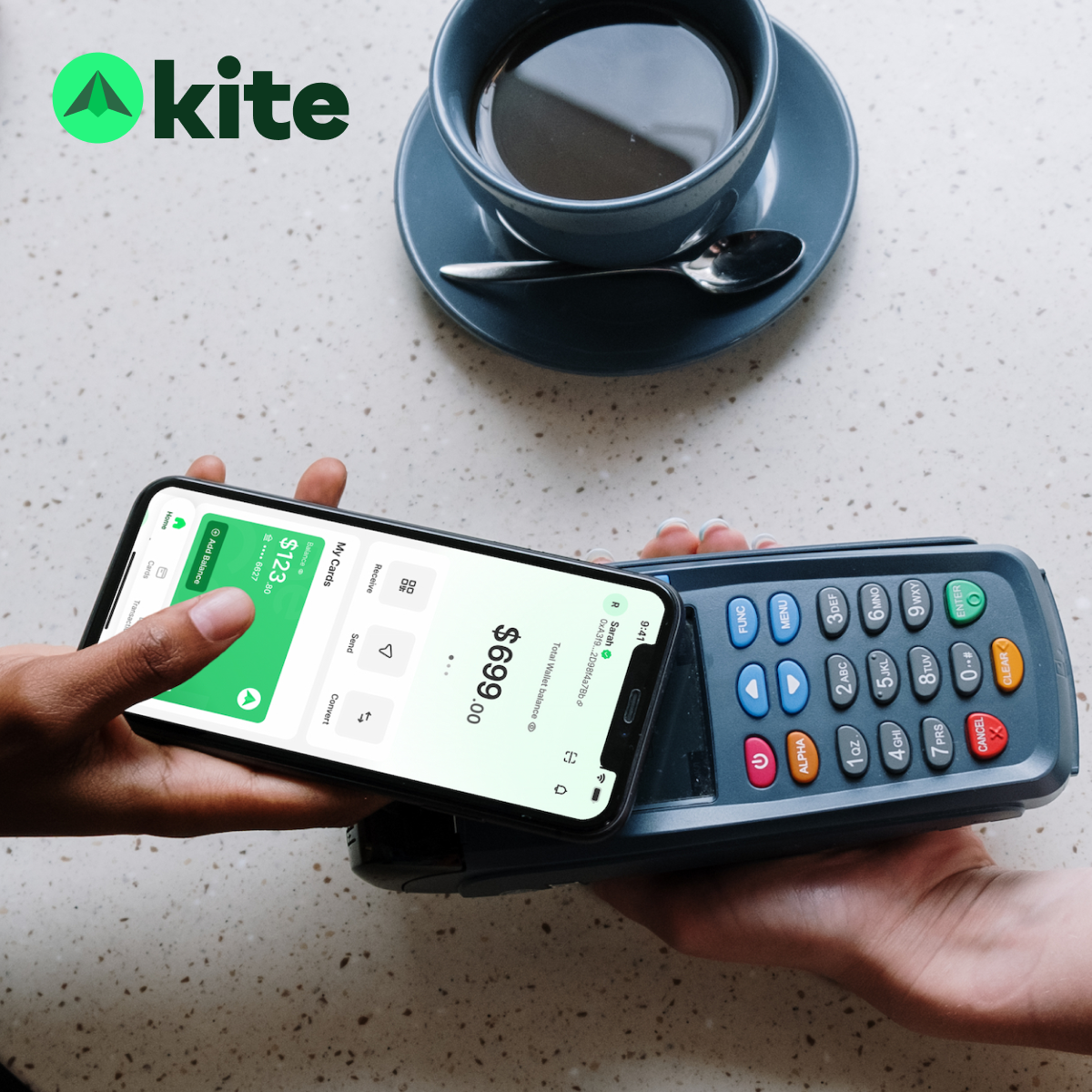
Stablecoin debit cards, like Kite, let you tap to pay at any shop drawing from your stablecoin balance and converting at checkout. It is the bridge between a wallet full of digital dollars and a cup of coffee.
Trading and DeFi
Inside crypto, stablecoins are the default unit of account. Traders park funds in them between trades, and decentralized finance apps use them for lending and borrowing. Some platforms pay yield on stablecoin deposits, though that yield always carries risk, and the new US rules limit when issuers themselves can pay interest.
Are stablecoins safe?
Stablecoins are reasonably safe to use but not risk-free, and “safe” depends entirely on which coin you pick.
A well-run, fully-reserved coin from a regulated issuer, like Circle and Tether, is low-risk for everyday use. A thinly-backed or algorithmic coin is a different story.
So how do you tell a safer stablecoin from a risky one? Use this checklist.
- Real, liquid reserves. Cash and short-term Treasuries, not exotic assets or IOUs.
- Regular reserve reports. Independent attestations published on a schedule, not vague claims.
- A credible, regulated issuer. A known company under a real regulator beats an anonymous team.
- Redeemability. A clear, working path to swap coins back for dollars.
- A track record through stress. Did it hold up, or wobble, during past market shocks?
A coin that ticks all five is in a different class from one that ticks none.
Stablecoins vs Bitcoin, CBDCs, and bank deposits
Stablecoins are often confused with Bitcoin, with central bank digital currencies, and with the money in your bank app. They are different things.
- Bitcoin is a volatile, decentralized asset with no peg.
- A CBDC is digital money issued by a central bank.
- A bank deposit is a claim on a commercial bank.
- A stablecoin sits in its own spot among them.
The cleanest way to see it is a comparison.
| Stablecoin | Bitcoin | CBDC | Bank deposit | |
|---|---|---|---|---|
| Who issues it | A private company | No one (decentralized) | A central bank | A commercial bank |
| Price | Pegged (about $1) in case of dollar-backed stablecoins | Floats, volatile | Fixed to national currency | Stable in currency terms |
| Where it lives | Public blockchain | Public blockchain | Government-run ledger | The bank’s ledger |
| Who controls your funds | You, if it is non-custodial like on Kite app | You | The central bank | The bank |
| Government-insured | No | No | State-backed | Often, up to a limit |
This answers two of the most common search questions directly.
- Is Bitcoin a stablecoin? No. Bitcoin has no peg and swings in price, which is the opposite of a stablecoin.
- Is a stablecoin the same as a CBDC? No. A company issues a stablecoin, while a country’s central bank issues a CBDC, more like a digital banknote.
There is one more distinction worth holding onto. With a true non-custodial wallet, you control the stablecoins directly, the way you control cash in your pocket. With a bank deposit or an exchange balance, a company holds the money for you.
How to start using stablecoins
Getting started with stablecoins takes three steps: get some, store them, and use them. Kite solves for all of them.
With Kite, you get a non-custodial wallet and Visa card for storing, sending, and spending stablecoins for free. You keep control of your funds, sends are gas-free, and you can spend your balance at any shop that takes Visa. If you want stable digital dollars that work in everyday life download and try Kite today.

Frequently asked questions
Is Bitcoin a stablecoin?
No. Bitcoin is not a stablecoin. It has no peg to any outside asset, so its price floats freely and can move sharply day to day. A stablecoin is specifically designed to hold a steady value, usually about one US dollar, which is the opposite of Bitcoin’s volatile behavior.
Is XRP a stablecoin?
No. XRP is a cryptocurrency with a floating, volatile price, much like Bitcoin or Ethereum. It is not pegged to the dollar or any other stable asset, so it is not a stablecoin. People sometimes confuse the two because XRP is used in payments, but its value is not fixed.
What are the top stablecoins?
As of June 2026, the largest stablecoins by market value are USDT (Tether) and USDC (Circle), which together hold about 84% of the market. Behind them sit crypto-backed USDS and DAI from Sky, the Trump-linked USD1, and PayPal’s PYUSD. USDT alone is roughly 60% of the market.
Does Donald Trump have his own stablecoin?
Effectively yes. A stablecoin called USD1 is issued by World Liberty Financial, a venture that CoinGecko and Wikipedia describe as backed by President Trump and his family. It launched in March 2025 and grew to around $4.8 billion. The arrangement has drawn conflict-of-interest criticism given his role in regulation.
Are stablecoins safe?
It depends on the coin. A fully-reserved stablecoin from a regulated issuer, such as USDC, is low-risk for everyday use. Riskier coins can lose their peg, as TerraUSD did in 2022. Crucially, stablecoins are not bank-insured, so the quality of the issuer’s reserves is what protects you.
How do stablecoin issuers make money?
Mostly from interest on their reserves. An issuer holding billions of dollars in short-term US Treasuries earns yield on those holdings while paying little or nothing to coin holders. With Treasury rates where they have been, backing a large fiat stablecoin has become a genuinely profitable business.
Can a stablecoin lose its value?
Yes. A stablecoin can “depeg,” meaning it trades away from its target price. USDC briefly fell to about 87 cents in March 2023 before recovering within days, because its reserves were real. TerraUSD collapsed to near zero in 2022 because it had no hard backing. Reserves are the difference.
What is the difference between a stablecoin and a CBDC?
A stablecoin is issued by a private company and runs on a public blockchain. A central bank digital currency (CBDC) is issued directly by a country’s central bank, more like a digital version of physical cash. Stablecoins exist and are widely used today, while most CBDCs are still pilots.
How do I start using stablecoins?
Convert local currency into a stablecoin through a trusted on-ramp or exchange, store it in a custodial or non-custodial wallet, then send or spend it. A non-custodial wallet with a linked Visa card, like Kite, lets you hold digital dollars and spend them at regular shops in a few taps.
When you are ready to use stablecoins in everyday life, not just hold them, join Kite to store, send, and spend digital dollars with a wallet you control and a card that works anywhere.