Kite is a stablecoin money app. It lets you store, send, and spend dollars from your phone, even in places where opening a U.S. dollar account normally isn't an option. The dollars are stablecoins, a kind of digital cash pegged to the U.S. dollar. You don't need to know how that works to use Kite, the same way you don't need to understand banking software to tap your card.
Most people now live more globally than their money allows.
We work for companies in other countries, get paid from abroad, support our family back home, and subscribe to tools billed in dollars. Yet moving and holding that money stays slow and expensive. Kite puts storing, sending, and spending in one place.
What does a stablecoin money app mean?
A stablecoin money app is a money app built around stablecoins, which are digital tokens designed to hold a steady value by tracking a real currency, like the U.S. dollar in case of Kite.
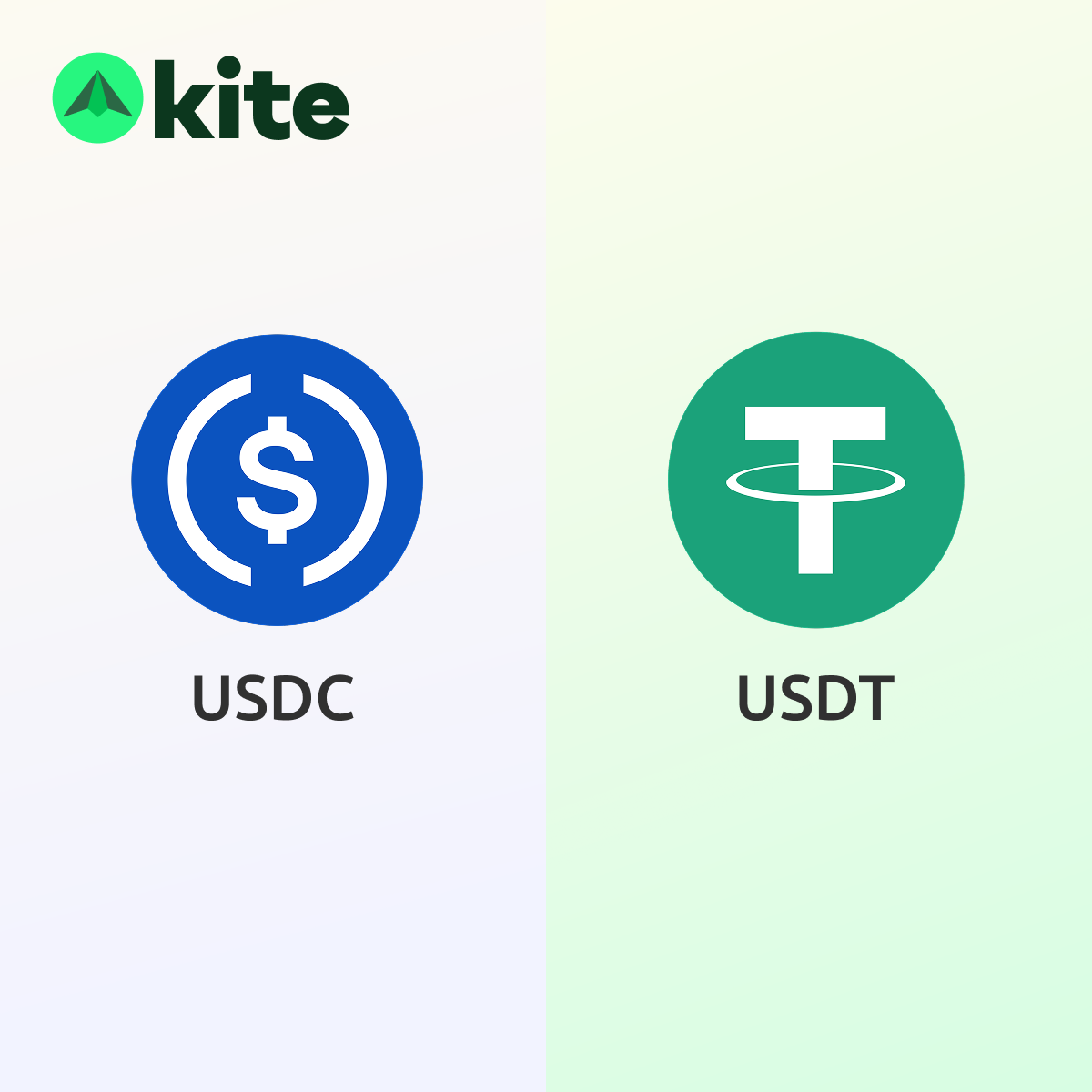
One dollar stablecoin (USDC or USDT) is meant to always be worth one dollar (USD). That's the "stable" part, and it's what sets this apart from the price swings most people associate with crypto.
Stablecoins are designed to stay at a dollar, and the reputed ones like USDC and USDT are backed by real reserves anyone can check.
For you, the payoff is that you hold a balance in dollars instead of a currency that might lose value before you get to spend it.
What can you do with Kite?
Kite does three things. You can store dollars, send dollars, and spend dollars, all from the same app. Each one is built to feel familiar, even though stablecoins are doing the work underneath.
| What you do | What it means | Why it helps |
|---|---|---|
| Store | Hold a balance in dollars | Protects savings from local-currency inflation |
| Send | Move dollars to anyone, across borders | Arrives in seconds, costs cents |
| Spend | Pay with a Kite app or card | Near the real exchange rate, far below the ~5% norm |
Store money
Storing money with Kite means keeping a balance in dollars that's meant to stay worth a dollar. For anyone whose local currency loses value over time, that alone is the point. Your savings sit in a steadier currency, ready whenever you need them, with no lock-up periods and no points to chase.
Because Kite is non-custodial, that balance is controlled by you, not held on Kite's books. More on what that means below.
Send money
Sending money with Kite means transferring dollars to another person across any border, usually in seconds and for a few cents. Old-school transfers can take days and lose a slice to fees at every hop. Kite skips most of that.
The technical parts of crypto stay out of your way. You pick the person and the amount, and the app works out which network to use. The first time you send to a new address, Kite runs a small test transfer to confirm it's correct, so a single typo can't swallow your savings. When the money lands, you get a notification.
Spend money
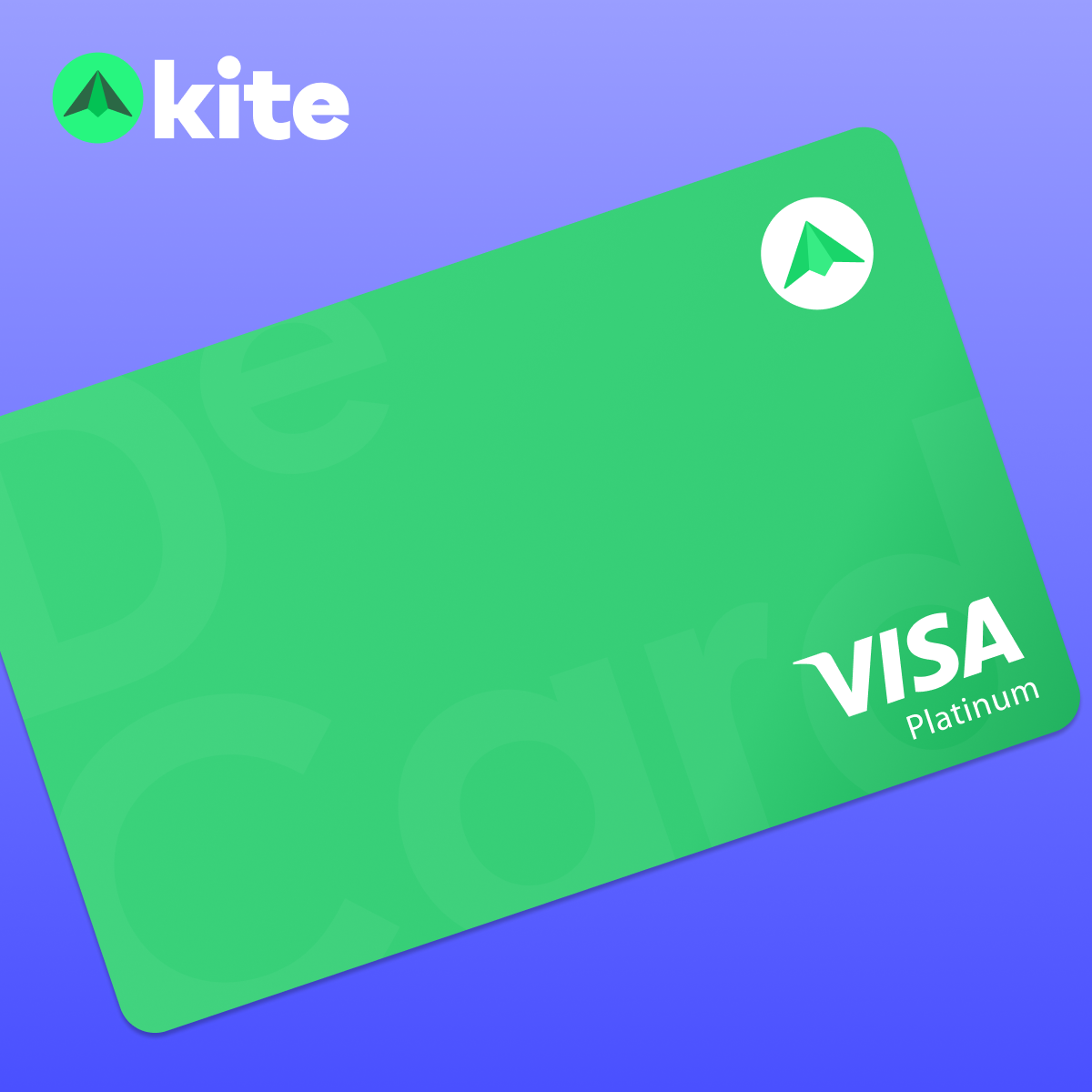
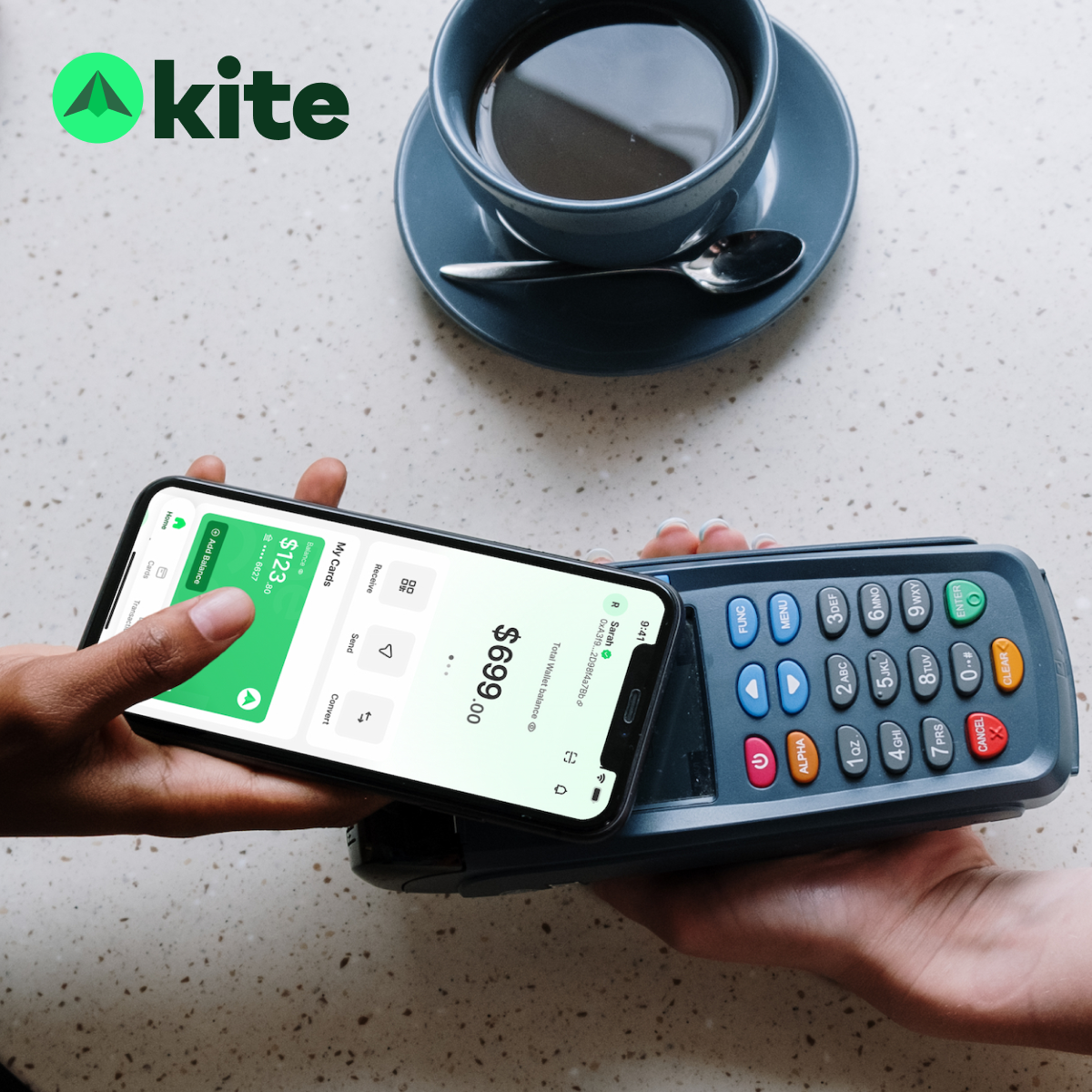
Spending money with Kite means using your dollar balance in the real world with a Kite card, at close to the real (interbank) exchange rate. There's no fee to get the card and no charge to replace it if you lose it. Card payments work today, and two more ways to pay are on the way. QR payments are rolling out across Southeast Asia and Latin America.
Add it up and spending a dollar abroad can cost close to 1%, instead of the roughly 5% travelers often lose without ever seeing it.
How is Kite different from a bank or a crypto exchange?
Kite sits between a traditional bank and a crypto exchange and takes the useful parts of each.
- Like a bank, it gives you a card, statements, and dollars you can spend.
- Like a crypto wallet, it's fast, global, and non-custodial.
Unlike most of either, it has no token to speculate on and no residency requirement just to hold dollars.
Importantly:
- Kite is non-custodial. Your balance is yours. Kite can't freeze it or quietly lend it out the way a bank lends out deposits.
- Kite has no token. There's nothing to buy, farm, or gamble on. The product is the product.
The product philosophy behind Kite
The biggest opportunity in stablecoins is not convincing billions of people to become crypto users. It is building a better financial experience and allowing stablecoins to quietly power it underneath.
Most crypto products were built by people who already understood wallets, seed phrases, network fees, token approvals, bridges, and blockchain addresses. They were then tested by people who understood the same things. When everyone testing a product already has MetaMask installed, it becomes difficult to see the friction that prevents everyone else from using it.
Kite is being built from the opposite direction.
We start with what someone is trying to do: protect their savings, get paid, send money home, spend while travelling, or move money between countries. The technology should solve that problem without asking the user to adopt an entirely new belief system first.
That philosophy shapes how we think about the product.
1. Wallets should feel like accounts, not security exercises
People should not need to write twelve words on a piece of paper before they can safely hold digital money. Wallet creation should happen quietly. Access should feel as familiar as unlocking a phone. Recovery should be understandable, and security should become stronger as a user’s balance and activity grow.
Technologies such as passkeys, biometrics, account abstraction, and smart contract wallets make this possible. But users should not need to know the names of those technologies.They should simply know that their money belongs to them, that it is protected, and that they have a safe way to recover access.
2. Moving money should not require understanding the rails
Most people do not care whether money moves through a bank transfer, a card network, USDC, USDT, or a particular blockchain.
They care about four things:
- How much will arrive?
- How much will it cost?
- How long will it take?
- Can I trust it to work?
A global money app should answer those questions clearly and handle the underlying route automatically. Our goal is to make adding and withdrawing money feel like one continuous experience: choose an account or local payment method, enter an amount, see the cost upfront, and move the money.
The user should not have to study stablecoins before being allowed to benefit from them.
3. People should express intent, not execute instructions
Sending money should begin with:
“Send $50 to Sarah.”
It should not begin with:
“Choose a network, paste a wallet address, estimate a gas fee, and hope everything is correct.”
The app should understand what the user wants and take care of the technical decisions underneath.
It should also help prevent mistakes before they become permanent. That means checking recipients, identifying unusual activity, explaining suspicious approvals, warning users when something looks wrong, and allowing pending operations to be cancelled where technically possible.
A successful transaction is not one that merely reaches the blockchain. It is one that accomplishes what the user intended.
4. The interface should feel familiar
Many crypto applications still feel like control panels designed for specialists however a consumer money app should feel much simpler.
Sending, spending, receiving, and exchanging money should take a few clear actions. Fees should be visible before confirmation. Balances should be understandable. Statements should look like statements, not block explorers.
People who want to understand the technology should be able to explore it progressively. People who do not should never be forced to.
5. Ownership still needs a consumer-grade trust layer
Giving people control of their money should not mean leaving them alone with every possible risk.
Traditional financial applications have trained people to expect warnings, fraud detection, clear records, and support when something goes wrong. Non-custodial products need to meet that expectation without taking control away from the user.
Over time, intelligent safeguards can identify suspicious destinations, dangerous token approvals, unusual account behavior, impersonation attempts, and transactions that do not match a user’s normal activity.
Instead of displaying a technical error code, the product should be able to say:
“This transaction looks unusual. Here is why.”
We would rather help someone avoid a bad transaction than celebrate that the protocol executed it exactly as instructed.
6. Compliance should protect the system without taking over the experience
A global financial product has to operate responsibly. Identity verification, transaction monitoring, and regulatory controls cannot simply be ignored.But compliance does not need to make every interaction feel like paperwork.
Users should be asked for information when it is necessary, told clearly why it is needed, and given control over how their personal data is used. Products should collect the minimum information required rather than treating every piece of user data as something to retain indefinitely.
The longer-term opportunity is to make verification more selective: proving that a user meets a requirement without unnecessarily exposing their complete identity, balance, or financial history. Privacy and compliance should not be treated as opposites. Well-designed systems should support both.
Is Kite safe, and who controls your money?
With Kite, you control your money. It's non-custodial, which means your balance lives in a wallet only you can open, rather than on Kite's balance sheet. Users can also set up easy recovery options for instances when they lose or forget their password.
Kite can't freeze your funds or move them without you. That's a deliberate choice, and a real difference from most banking and exchange apps.
Where is Kite available, and who uses it?
Kite is launching across nine countries in the Asia-Pacific to start. They are:
- Australia
- Malaysia
- Philippines
- Singapore
- Thailand
- Vietnam
- Taiwan
- Japan
- South Korea
New countries are added in stages, because money products have to be rolled out carefully.
Kite is best for people who live cross currencies. Freelancers paid in dollars, families sending money home, frequent travelers, and anyone who wants to keep part of their savings in something steadier.
How to get started with Kite
Getting started takes a few minutes. Join the waitlist at kiteapp.xyz, and Kite will open access as it reaches your region. From there you can add funds, store them in dollars, send to anyone, and spend with a card. If you've ever lost money just by moving it across a border, this is where that stops.
Frequently asked questions
What is Kite?
Kite is a stablecoin money app for storing, sending, and spending dollars across borders. You hold a balance in dollars, send it to anyone in seconds, and spend it with a card at close to the real exchange rate. The dollars are stablecoins, but no crypto knowledge is needed to use it.
What is a stablecoin, in simple terms?
A stablecoin is digital money designed to stay equal to a real-world currency, usually the U.S. dollar. One dollar stablecoin is meant to always be worth one dollar. Reputable stablecoins are backed by reserves, which keeps that value steady. Kite uses them so your balance behaves like ordinary dollars.
Is Kite a bank?
No. Kite is a money app, not a chartered bank. It gives you a dollar balance you can store, send, and spend globally. Because it's non-custodial, your money is controlled by you rather than held on a bank's balance sheet.
Does Kite have a token?
No, and that's on purpose. There's no Kite token to buy or speculate on. Kite earns its place as a product people use, not by launching a coin, so you can judge it purely on whether storing, sending, and spending dollars works well.
How much does Kite cost to use abroad?
Spending on a Kite card runs close to the interbank exchange rate plus a small conversion fee, well under the roughly 5% travelers often lose to FX markups and convenience fees. As QR and UPI payments roll out, the all-in cost of spending a dollar abroad approaches 1%.