There's a tax you'll never see on a receipt. You don't pay it at a counter or sign for it on a form. You pay it for being born in the wrong currency.
You rarely notice it, because it never arrives as a single bill. It hides inside exchange rates. It shows up as a "convenience" fee. It works quietly, every day, as savings held in a slipping currency lose their value. Add it up across a lifetime and it's staggering.
This is the ‘why’ for Kite.
The world went borderless. Money didn't.
Look at how your life is stitched together now. You might work for a company headquartered in another country. Get paid from abroad. Support family back home. Pay for tools and subscriptions priced in dollars. Hundreds of millions of people now live and earn outside the country they came from, and you may be one of them.
Money is the one thing that never caught up.
Transfers still take days. Foreign-exchange fees turn up where you least expect them. A card that works at home fails the moment you land somewhere new. You end up taping three or four apps together just to move and use your own money.
The money migrants alone send home reached an estimated $685 billion to low- and middle-income countries in 2024, more than foreign direct investment and foreign aid to those countries combined. For much of the world, this is the economy. And it still runs on rails built for a world that no longer exists.
The hidden tax, part one: it costs too much to move
Here's where the tax begins. In the fourth quarter of 2023, the global average cost of sending $200 across borders was 6.4% of the amount sent. Governments agreed, as a UN Sustainable Development Goal, to push that under 3% by 2030. The world is nowhere close. It's sitting at more than double the target, and the number has barely moved in years.
Picture what that means for you, or for whoever is waiting on the money you send. In many places, $50 is a month of groceries. Send wages home and you can lose that much to fees, swallowed in the gaps between banks and middlemen.
By the World Bank's math, simply hitting the 3% target would put roughly $20 billion a year back into the hands of the families who need it most. But the fee is only half the story. What that money does when it lands is the other half.
To many of us, individually, a 1% reduction in fee might not move the needle. Life goes on as usual. But surprisingly, a recent study showed that a 1% increase in remittances flowing into an emerging nation reduces poverty by 22%!
Efficient remittances may not erase poverty. But they certainly enable many families living below the poverty line to come out of it by themselves. What many people may brush off as a rounding error is real money that could have shortened the journey out of poverty for many.
The hidden tax, part two: your savings erode while you hold them
If you save in a currency that's losing value, you get poorer while you sleep. In 2024 alone, Nigeria's naira lost roughly 40% of its value against the dollar. Argentines, Turks, Venezuelans, and millions of others have lived versions of the same story for years.
You can do everything right, work hard, spend carefully, save diligently, and still watch your savings shrink because of a currency you never chose.
The obvious defense is to hold a stronger one, usually the US dollar. But where you live, a dollar account may be outright inaccessible. The people who most need protection from their own currency are the ones locked out of the tool to get it.
The part the industry would rather not admit
Here's the uncomfortable truth about finance. Most of it, including most of crypto, is built for the people who least need the help.
The industry pours its best talent into slicker apps for users who already have five of them. It designs for the already-banked, the already-wealthy, the already-online.
Even in stablecoins, a corner of the industry that loves the word "accessibility," most products quietly assume a first-world user with a first-world bank account waiting on the other side. They build for the 1% who already hold crypto, and call it inclusion.
Meanwhile, 1.4 billion adults are still completely. Not underserved. Unbanked. Outside the formal system entirely.
People already voted. The industry just wasn't listening.
While the industry argued about regulation and yield, ordinary people in the hardest-hit economies started solving this themselves, with stablecoins.
Stablecoins now make up around 62% of all crypto transaction value in Argentina, higher than Brazil and well above the global average. In Pakistan, a young, mobile-first population uses dollar stablecoins to hedge against inflation, alongside the roughly $35 billion in remittances that flows in each year. Much of the world's stablecoin activity now happens in places like Lagos, Karachi, and Buenos Aires.
The most important use of digital dollars is a teacher trying to stop her savings from melting, or a freelancer who wants to be paid without losing a cut to three intermediaries.
What's missing is a product that treats those people, and you, as the main character.
Why Kite
That's why Kite exists.
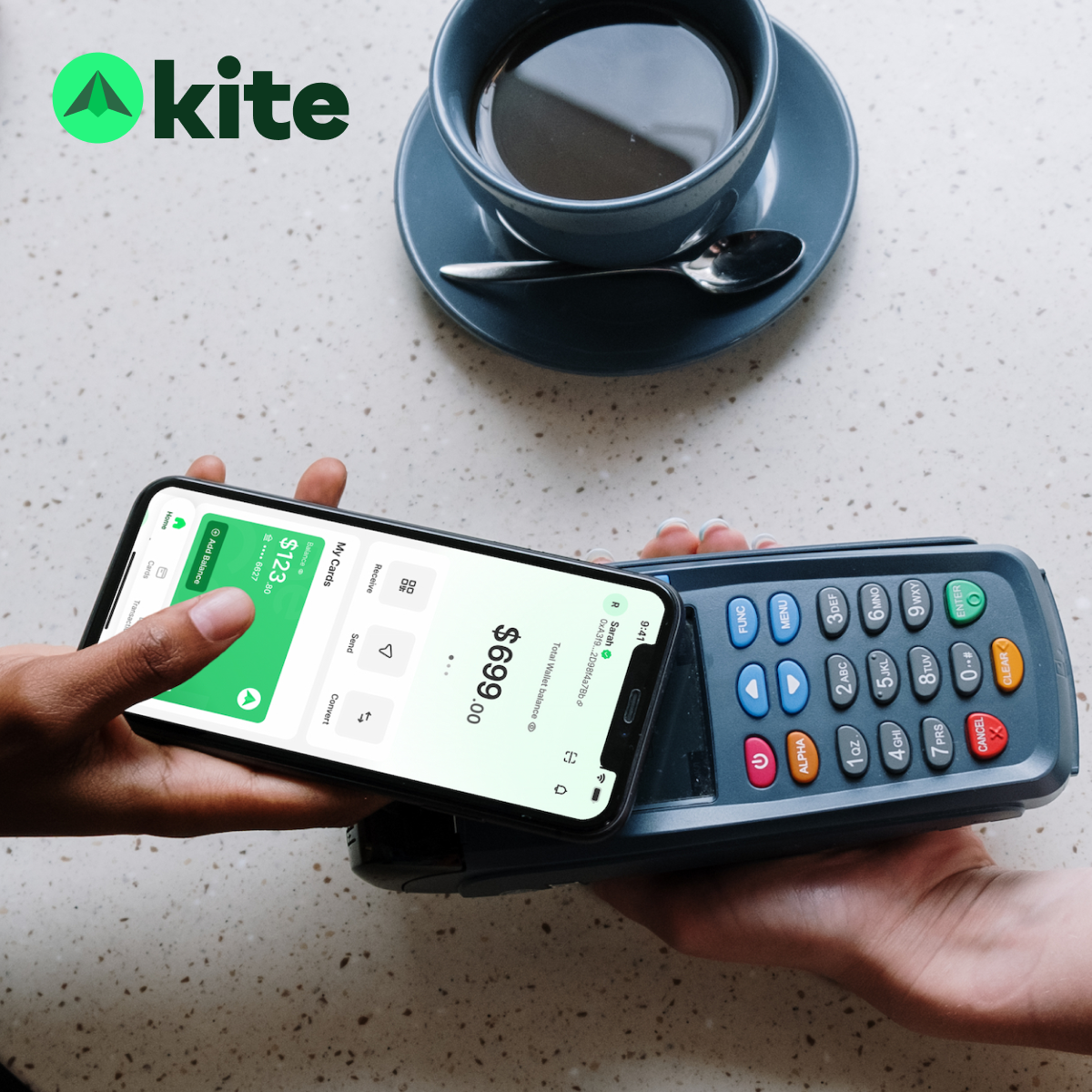
Kite is built so you can store, send, and spend dollars from your phone, wherever you happen to live.
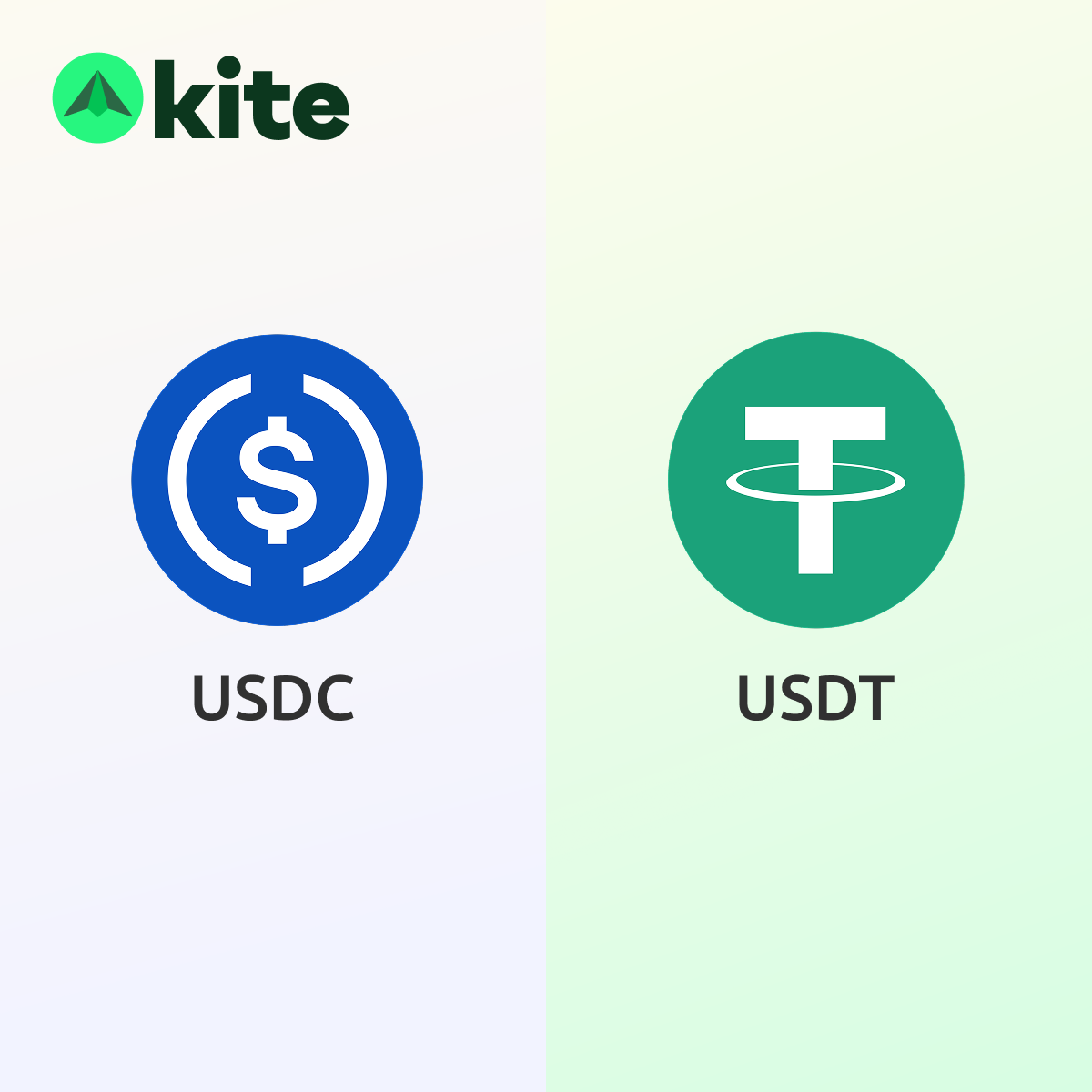
The technology behind it is stablecoins, but the idea is much older than crypto.
For years, crypto was mostly a casino, and a casino is no place to keep your rent money. A stablecoin is different. It's the first time the technology has actually matched the problem.
Maybe you already know this story. Maybe you've watched someone you love count carefully, save slowly, and stretch whatever the month allowed. Most of the world lives some version of it, and too much of finance has quietly decided those people aren't worth designing for. Kite is built on the opposite belief.
You should be able to hold money that keeps its value, and send it to the people you love without being punished for the distance between you.
That's the ‘why’.
Frequently asked questions
Why does Kite exist?
Kite exists to end the hidden tax people pay for being born into a weaker currency. Moving money across borders costs a global average of 6.4%, and savings held in volatile currencies lose value to inflation every year. Kite gives you a simple way to store, send, and spend stable dollars from your phone.
What problem is Kite solving?
Two linked problems. Sending money across borders is expensive, a 6.4% global average against the UN's 3% target, and holding savings in unstable local currencies erodes their value over time. Kite addresses both by letting you hold and move US dollars, in the form of stablecoins, without a foreign bank account.
Why use stablecoins instead of regular banking?
For most people in emerging markets, a US dollar bank account is blocked by residency rules, high minimum balances, and paperwork. Stablecoins offer dollar stability without those barriers. A large and growing share of the world's stablecoins is already held in emerging markets, mostly to protect savings and move money, not to speculate.