A client in another country owes you $2,000 for a month of work. You send the invoice and wait. Four days later the money lands as $1,800, because a correspondent bank you never chose skimmed a fee and handed you a mediocre exchange rate on the way through.
You did the work but the banking system took the cut.
Getting paid in stablecoins is how a growing number of freelancers stop losing that cut. You get paid in digital dollars that arrive in minutes and cost just a few cents.
This guide is written for freelancers who are not crypto experts and have no interest in becoming one. We keep the jargon to a minimum and stay on the one thing you care about, which is getting paid and keeping what you earn.
Disclaimer: All information in this article is purely for educational and research purposes. Information regarding taxes and regulation is generalized and Kite does not provide any legal or financial advice to users. Please do your own research and/or hire professionals before making a financial decision of any kind.
Understanding stablecoins
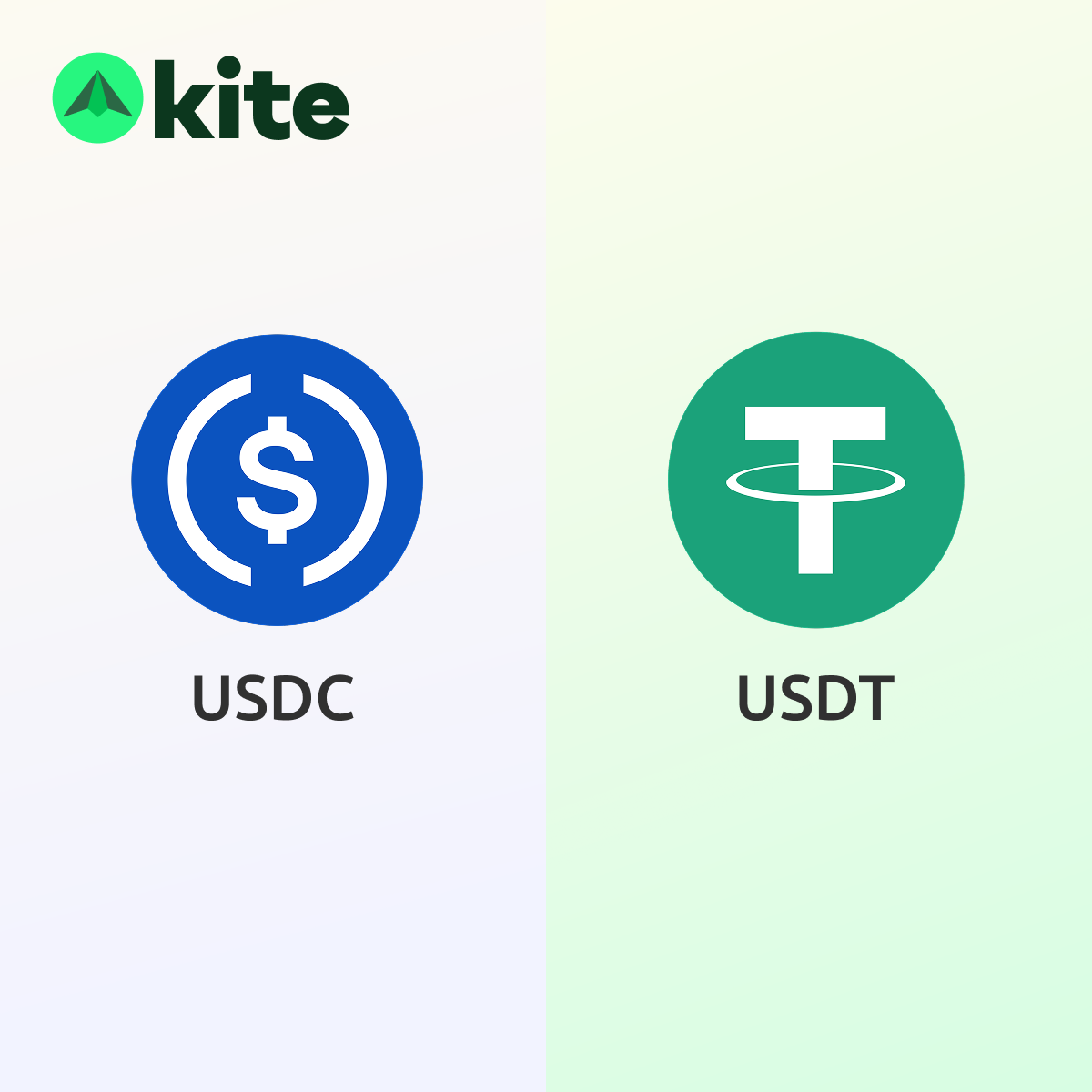
A stablecoin is a digital dollar. It is a token pegged one to one to a real currency, almost always the US dollar, and the two you will meet are USDC and USDT (the largest US Dollar stablecoins by market cap).
When a client pays you 1,500 USDC, you receive 1,500 dollars of value in your wallet, usually within a minute regardless of when they send it. There are no weekend or holiday delays like in the case of banks.
Getting paid Stablecoins vs Bitcoin (or any other “crypto”)
Most experienced freelancers who agree to get paid in crypto opt for stablecoins rather than Bitcoin or any other asset.
Yes, stablecoins are also cryptocurrencies just that they are not volatile (prices don’t swing as much) like the other popular cryptoassets (think Bitcoin, Ether, Solana, etc).
So why should you opt to get paid in USDC or USDT stablecoin?
Opting for Bitcoin or other volatile assets instead of dollar-pegged stablecoins introduces three significant challenges:
- Price volatility: Regular cryptoasset values can shift dramatically in hours. If you agree to a $2,000 fee, the market could move against you before the payment even lands, turning your expected income into $1,850 or less.
- Tax complications: Most tax authorities treat Bitcoin as an asset rather than just currency. This can lead to a "double taxation" effect where you owe income tax on the initial payment and a separate capital gains tax if the price increases before you cash out.
- The gambling aspect: Using a volatile asset for your salary means you are essentially gambling with your primary income. While the price could even move up (in your favour), relying on market luck for your rent and groceries is clearly not a wise financial decision.
A dollar-pegged stablecoin helps by keeping your accounts clean. Your $2,000 is still $2,000 when it arrives and when you spend it. You keep the speed and global reach of crypto with none of the volatility that makes it a bad way to get paid. If you want to choose between the two main coins deliberately, we compare USDC and USDT here.
And if you still want Bitcoin or any other cryptocurrency, you can easily swap a few of your stablecoins for them and keep them in your wallet.
Start with a user-friendly wallet
You need exactly one thing before a client can pay you. A stablecoin wallet.
A wallet is just an app that holds your digital dollars and gives you an address, which works like an account number that a client sends money to. That is it.
There are many free crypto wallets on the market, each with its own purpose. You must choose one that was made with your use case in mind. Only then will your experience feel hassle-free.
Our natural suggestion is to use the Kite Wallet. We built it from the ground up to help freelancers like yourself send, receive, and spend stablecoins without learning complex technical concepts.
If you still want to explore other options, ask the following questions to ensure you are choosing the right app for your hard earned money.
1. Is the crypto wallet non-custodial?
Some apps hold your balance for you, like a bank does. This is called a “custodial” model.
In a custodial model, the company can freeze your account during a review, or even use your funds for other purposes without your knowledge (a practice called “rehypothecation”).
A non-custodial wallet means you hold your own money and no company can freeze it. For income you depend on, that control is very important. The Kite Wallet is non-custodial, so your balance is always yours to move or spend.
2. Is the wallet easy to set up, back up, and recover?
A traditional crypto wallet hands you a 12-word seed phrase and warns that if you lose it your money is gone forever, and if anyone sees it they can drain you.
Kite Wallet removes that anxiety for you. You sign in with your phone number and a one-time code, like any normal app, and the security runs behind the scenes with nothing to write on a sticky note and lose.
How to get a client to pay you in stablecoins
Stablecoin payment is easy to arrange with a client who already uses crypto, and a harder sell with one who does not. Match your approach to who you are dealing with.
- Many crypto-native clients (web3 companies, startups, agencies already in the space) prefer paying in stablecoins over regular methods. When dealing with such clients, it’s best to just ask and state your preference.
- Companies that hire freelancers globally are also getting tired of the limitations that traditional payment methods impose. If the client does not have a rigid payment SOP, you can negotiate for a stablecoin-based payment.
- Traditional clients with zero crypto experience are often wary of crypto in general. In such cases, rather than pitching for stablecoins as a payment mode, begin by briefly educating them on why you prefer that payment method and ask if they could accommodate your preference. To nudge them further, you can offer incentives like including a few extra items in your service scope.
How to get paid in stablecoins, step by step
Once the client agrees, here are the next steps.
Send your receiving address and network
If you’re using a regular crypto wallet, you have to provide the client your wallet address (a 42-character long string of digits). When you do this, ensure you copy the address carefully because even a single incorrect digit can lead to irrevocable loss of funds. Note that different blockchains may have different addresses, so you must discuss the blockchain on which you are paid with the client.
Better yet, you can use your Kite Handle. When you download and set up Kite, you get a Kite Handle which acts as your universal account number. You can share it with your clients and your clients can pay you on any chain and the funds will still land securely in your wallet.
Invoice as normal, in dollars
Send a regular invoice with your fee in US dollars, then note that payment is in USDC or USDT to the address you provided. Date it and describe the work. Self-issued, well-dated invoices are exactly what most tax authorities want even when the client hands you no contract.
The transfer usually confirms in seconds to a minute. Confirm the amount and that it arrived on the network you expected.
How to spend or cash out your stablecoins
Conventionally, spending or cashing out stablecoins will require you to register an account with an exchange or an off-ramp, complete KYC, transfer your assets, and finally cash out to your account by paying a hefty fee.
You can take the simple and more efficient route, i.e., using a Kite card.
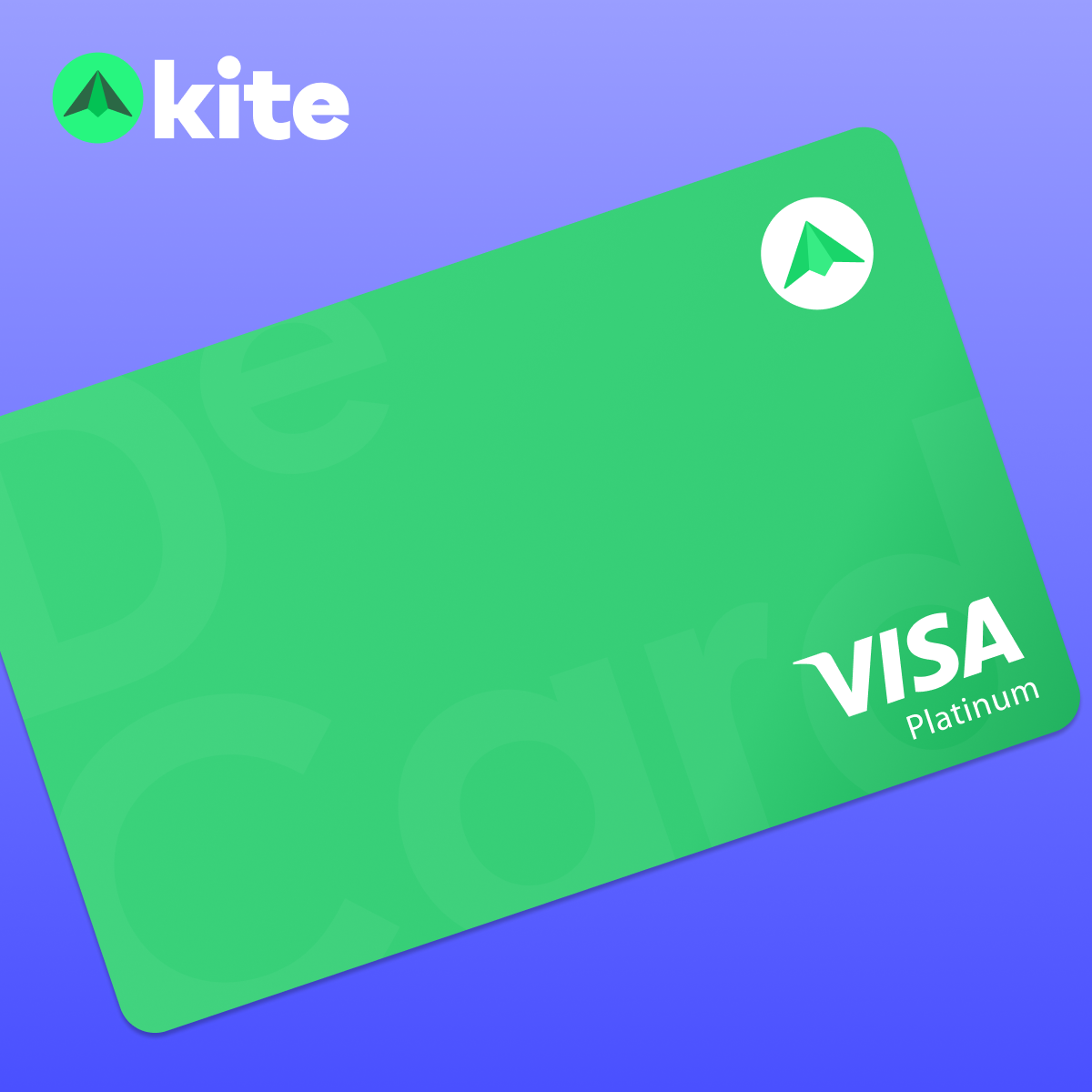
Kite card is a virtual Visa debit card that spends your stablecoin balance directly, anywhere Visa is accepted, online or in stores. You load your USDC or USDT onto the card, the balance sits in US dollars, and you pay like any normal card.
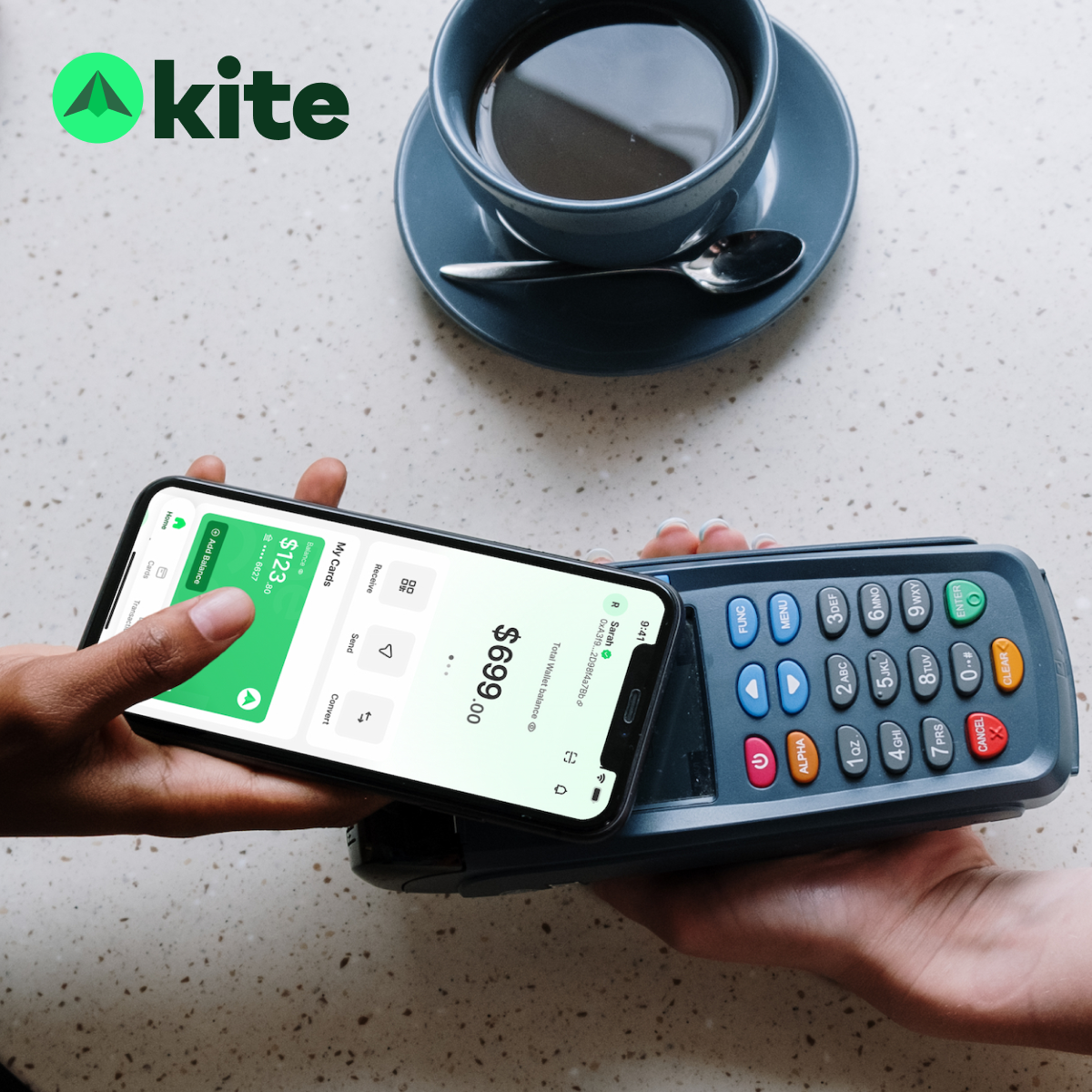
There is no issuance fee and no monthly fee, and because the balance is already in dollars, a US-priced purchase costs nothing extra to convert. Add the card to Apple Pay or Google Pay and you can tap to pay straight from your phone.
You still have the other options when you need them. You can send stablecoins straight to someone else from your wallet in seconds for a few cents (or for free via Kite), or convert to local currency through an exchange when you genuinely need cash in the bank.
Do you pay tax on stablecoins?
Yes, and treating stablecoin income as a way to dodge tax is how freelancers get into real trouble. Done properly it is simpler than most people fear.
In most countries two separate things can be taxed:
- Income: In a country like Canada, when a client pays you, that is income, valued in your local currency on the day it lands, and taxed like any other freelance earning.
- Capital gains: If the asset changes value between when you receive it and when you sell or spend it, that change can be a separate gain or loss.
Now here’s the advantage of stablecoins. Because a dollar-pegged coin barely moves, that second event is usually close to zero. When you get paid, say, 3000 USDC and you spend it all, you essentially spend 3000 USD. So, there is no capital gains (or loss) associated here that you would have to keep track of.
Note: Tax laws can vary by jurisdiction and Kite does not provide tax advice of any kind. Do your own research and/or consult a professional before acting on any information you find on the internet.
Is getting paid in stablecoins legal and safe?
For most freelancers in most countries, yes on both counts.
Receiving stablecoins for work is legal and is treated as ordinary income. A handful of countries restrict crypto and the tax treatment varies, so please check on your own jurisdiction.
On safety, the risk people imagine is volatility and scams, which is fair for meme coins (speculative cryptocurrencies created without utility) and largely irrelevant for a reserve-backed dollar stablecoin like USDC.
The real safety question is who holds your money, which brings us back to the wallet. Keep your funds in a non-custodial wallet, like Kite Wallet, that you control, protect the app with a strong password and two-factor login, and never share your passwords with anyone.
Your action plan for this week
Here are five things you can do today to start accepting stablecoin payments:
- Download Kite and set up your Kite Wallet.
- Make note of your Kite Handle. You need this to receive payments.
- Message one client who pays you internationally and offer stablecoin payment.
- Send your next invoice in dollars, payable in USDC or USDT, and provide your Kite Handle.
While the client cellars your invoice, complete your KYC on Kite and instantly get a virtual Visa debit card that will allow you to spend stablecoins like regular money at shops and websites.
Conclusion
Getting paid in stablecoins is not only for crypto people. It is a faster, cheaper way for freelancers worldwide to get paid in dollars, without the volatility of ordinary crypto or the drag of the banking system.
When you are ready to hold and spend a dollar balance in one place, see how the Kite card works.
Frequently asked questions
Is getting paid in stablecoins legal?
In most countries, yes. Receiving stablecoins for freelance work is legal and treated as ordinary income, taxed at its local value on the day you receive it. A small number of countries restrict crypto and tax rules vary, so check your own jurisdiction and keep clear records.
How do I cash out stablecoins to my bank?
You can use Kite Off-Ramp to convert stablecoins into your local currency. The stablecoins will be converted into your local currency and deposited into your bank account. Alternatively, you can top up your Kite Visa card with stablecoins and start spending from there.
Which stablecoin should I ask to be paid in?
USDC and USDT are the two standards, both pegged to the US dollar, and either works for most clients. Agree the network too, since a low-fee chain like Base or Polygon keeps transfer costs to cents.
Do I need a bank account to get paid in stablecoins?
No. You receive stablecoins into a crypto wallet, not a bank account, which is part of why they help freelancers in places with limited banking. You only involve a bank if you choose to convert to local currency, and even that is optional if you spend the balance with a card.
How do I invoice a client for a stablecoin payment?
Send a normal invoice with your fee fixed in US dollars, then state that payment is in USDC or USDT to your wallet address on a named network. Date it, describe the work, and record the dollar value on the day you are paid.