You hold USDT. Millions of people do, because it is the easiest way to keep money in dollars without a US bank. The problem starts the moment you try to actually use it. Your local coffee shop does not take Tether, and neither does your electricity provider or your favorite online store.
We will show you how to pay with USDT in real life, how to spend it on a card, how to send it to people who need it, and how to turn it into your local currency when you need to.
What is USDT?
USDT, also called Tether, is a stablecoin pegged one to one to the US dollar. One USDT is designed to always be worth one dollar, so unlike Bitcoin it does not swing in value. It is the largest and most traded stablecoin in the world, and in much of Asia, Africa, and Latin America it is the default way people hold dollars digitally.
If you earn, save, or get sent money in USDT, you are effectively holding dollars on a blockchain. The catch is that those rails (the blockchain) were built for moving money between wallets, not for buying groceries.
Also Read: USDC vs USDT
Can you spend USDT in everyday life?
The vast majority of shops, websites, and billers have no way to accept USDT, and the handful of merchants that do are rare enough that you cannot rely on them. So, what is the solution?
There are three practical ways to spend USDT:
- Spend USDT with a card. Use an app that allows you to store USDT and use that balance to top-up your debit card and spend anywhere in the world.
- Send it to someone. Move USDT directly to another person's wallet, which is ideal for paying people or supporting family.
- Convert it to local cash. Cash out to your bank when you specifically need physical money.
How to spend USDT with the Kite card
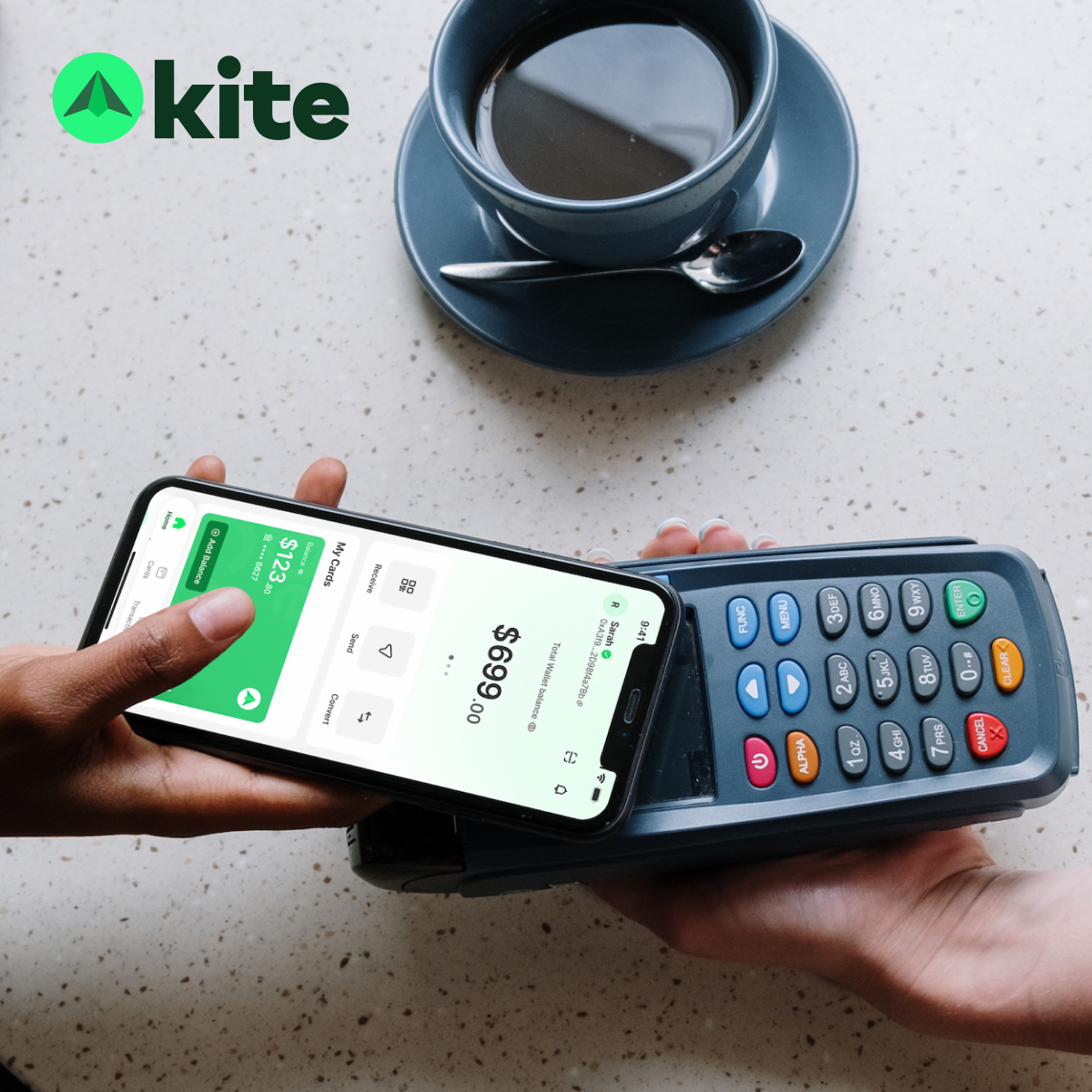
The cleanest way to spend USDT is to stop thinking of it as crypto and treat it like a regular balance in a bank account through a card. The Kite Stable Card is a Visa card that spends a US dollar balance you fund with USDT. You are not asking the merchant to accept Tether. To them it is an ordinary Visa payment.
Here is how it works.
- Hold your USDT in the Kite Wallet. Your wallet is non-custodial, so the funds stay yours.
- Top up the card. Move USDT from your wallet to the card, and the balance lands in US dollars.
- Spend anywhere Visa works. Pay online, or add the card to Google Pay, Alipay, WeChat Pay, and tap in stores.
Because the balance is already in dollars, a later dip in the market does not touch what you loaded, and there is nothing to convert at the moment you pay. Getting the card is free, with no monthly or annual fee.
If you would rather hold the other main stablecoin, the same card works for USDC.
Spending USDT online and when you travel
Online is where a USDT-funded card earns its keep. A dollar card sails through checkouts that reject a local card, which is a common wall for subscriptions and services priced in US dollars. You enter the card details like any other card, and the payment clears in dollars from your balance.
Travel is the other everyday win. Abroad, an ordinary bank card usually adds a foreign-transaction fee of around 3% on every purchase. Spending your dollar balance instead means one flat 1.8% on non-dollar spends and nothing at all when you pay in dollars, so the money you saved holding USDT does not leak back out at the terminal. Tap to pay with Apple Pay or Google Pay exactly as you would at home.
How to send USDT to family and friends
Sending is USDT's original superpower. If you support family in another country, USDT moves value across a border in seconds for a few cents, which undercuts traditional remittance services on both speed and cost.
With Kite you send USDT straight from your wallet to another wallet address. Sending is free up to a daily limit and then a small flat fee is applicable. Kite also covers the network fees (a fee charged by the blockchain) on applicable chains.
The person on the other end holds dollars, which they can then spend or cash out the same way you do.
One rule keeps this safe. Always double-check the wallet address and the network before you send, because a mistake there cannot be undone.
Send with Kite Instant
Dealing with lengthy wallet addresses is very scary. It is very difficult to check them and ensure every character is correctly carried over.
That is why we came up with Kite Instant.
If the person you are sending USDT to is using Kite, they can share their Kite Handle (look on the top left corner of the app) with you and you can send USDT to that handle.
Since Kite Handles are similar to social media usernames, they remove the anxiety normally associated with the conventional hexadecimal wallet addresses.
How to turn USDT into cash
How many times have you found yourself asking "can I convert my USDT to cash"?
Sometimes you genuinely need physical local currency. Normally, you have three routes for this:
- Use Kite Off-Ramp
- Convert on a third-party exchange
- Use a peer-to-peer service
1. Using Kite Off-Ramp to cash out USDT
When you use Kite Off-Ramp, you can directly convert USDT to your local currency paid to your bank account.
With Kite Off-Ramp, you do not have to re-do your KYC or worry about compliance. All transactions are screened and processed in a regulated manner.
2. Converting via third-party exchange
Another way to convert Tether to cash is by going through a conventional crypto exchange. This would require you to register and complete KYC on a regulated exchange, then transfer USDT from Kite to that exchange, and proceed to withdraw the balance you just loaded onto the exchange to your bank.
This is most expensive (due to the multiple hops your USDT is making) and most time-taking (as you have to complete KYC and wait for approval).
3. Using a peer-to-peer service
Using a peer-to-peer (P2P) service is one of the most common ways that people convert stablecoins to local cash when there are no usable or compliant providers in their location.
Here, you use a service that connects you to others that are looking to buy USDT. You send your USDT to them and they send you cash. However, these services generally operate in the grey area of the law and there is a high probability of users getting scammed.
Conclusion
USDT is a great way to hold dollars, and with the right setup it is just as good a way to spend them.
Load USDT onto your Kite Stable card and spend a dollar balance anywhere Visa is accepted, and only convert to cash when you truly need notes.
Spending USDT in real life has never been this easy! See how the Kite Stable card works.
Frequently asked questions
How do I spend my USDT?
The easiest way is a card that converts USDT to dollars at checkout, like the Kite card, which lets you pay any Visa merchant online or in stores. You can also send USDT directly to another person's wallet, or convert it to local currency on an exchange when you need physical cash.
Can I convert my USDT to cash?
Yes. You can sell USDT for your local currency on a crypto exchange or a peer-to-peer service, then withdraw to your bank. To minimise fees, cash out in larger, less frequent amounts. For everyday spending you can skip cashing out entirely by using a card tied to your USDT balance.
What can you buy with USDT?
Through a card that converts it to dollars, effectively anything a Visa card can buy: groceries, bills, subscriptions, travel, and online purchases. Directly with USDT, your options are limited to the small number of merchants and platforms that accept Tether, which is why most people spend it through a card.
Is it safe to spend USDT?
Spending USDT through a card like Kite is as safe as any Visa payment, with the same merchant protections. The bigger safety question is where you hold it. A non-custodial wallet like Kite Wallet keeps your USDT in your control rather than a company's, so it cannot be frozen out from under you.
Which networks does USDT use for spending?
USDT exists on several blockchains. For funding the Kite card you can use USDT on Ethereum or Polygon. Polygon usually means lower network fees, so it is a good default for topping up unless you already hold your USDT elsewhere.
Is USDT better than USDC for spending?
For everyday spending they work the same way, since both are dollar stablecoins you convert at the point of sale. USDT is more widely held, especially outside the US, while USDC is often preferred for its regulatory profile. Our USDC vs USDT guide covers the differences in full.