What if the subscription you think costs $20 a month has quietly been costing you $21.40? Not because the price went up, but because your bank converted currency twice, added a cross-border fee, and printed the whole thing on your statement as one number you never questioned.
If you're paying for ChatGPT, Adobe, Notion, GitHub or a streaming service from outside the United States, this is happening to you right now. The charge arrives in dollars, your card settles in something else, and the difference goes to somebody who isn't you.
So how do you pay a US subscription without a US card, and which parts of this problem can actually be fixed?
Why does paying for US subscriptions cost extra?
Because your card and the merchant are in different currencies, and the gap between them is priced three times.
A US service bills you $20. Your card is denominated in pesos, baht, ringgit or rupiah. Somewhere between the merchant and your account, dollars get converted into your currency, and that conversion carries a markup over the wholesale rate. On most locally issued cards that's around 3%, and many banks add a separate cross-border or international transaction fee on top.
Then there's dynamic currency conversion, which is the checkout offering to bill you in your home currency instead of dollars. It sounds helpful. European consumer research found DCC markups ranging from 2.6% to 12%, averaging around 5%, and consumers were worse off in practically every case they examined.
So, essentially, you're paying a fee to see a familiar currency symbol. Here's what that compounds to an ordinary subscription stack.
| Monthly USD subscriptions | Annual total | Lost to a 3% FX markup |
|---|---|---|
| $20 | $240 | $7.20 |
| $50 | $600 | $18.00 |
| $80 | $960 | $28.80 |
| $150 | $1,800 | $54.00 |
Also Read: Best Debit Cards With No Foreign Transaction Fees
Why do foreign cards get declined by US services?
The first is risk scoring. Cross-border authorisation rates run below domestic ones because issuing banks flag unfamiliar foreign transactions more aggressively. Your card works perfectly at home and gets declined on a US checkout for no reason you can see, and the merchant often can't tell you why either.
The second is deliberate geography. Some services are sold only in the United States and check the country your card was issued in, not the billing address you typed. That country is encoded in the card's BIN, the first six to eight digits, which tells the merchant which issuer and which country the card belongs to. Entering a US address changes nothing, because the address isn't what's being checked.
Which US subscriptions can you pay for from outside the US?
Almost all of them. The category that genuinely blocks foreign cards is small, and it's worth knowing which side of the line your stack sits on before you change anything.
| Type of service | Sells to you internationally | What the card has to handle |
|---|---|---|
| AI and productivity tools | Yes | USD billing, recurring charges |
| Developer and cloud platforms | Yes | USD billing, occasional usage spikes |
| Design and creative software | Yes | USD billing, annual plans |
| Global streaming platforms | Yes, with a local catalogue | Local or USD billing |
| US-only streaming and live TV | No | A US-issued card and a US address |
For everything in the first four rows, the only obstacle is currency. You're not locked out, you're being charged a conversion you don't need to pay.
The last row is a different product. Those services sell a US television licence, and the card is the mechanism they use to check you're in the US. No stablecoin card changes that, and we'd rather say so than let you spend a weekend testing it.
What to look for in a card for US subscriptions
Four things decide whether a card handles recurring dollar billing well.
- The settlement currency. If the card settles in USD, a USD charge involves no conversion at all, and the FX question disappears rather than being discounted.
- What it costs to get money onto the card, since a low spend fee paired with an expensive top-up just moves the charge.
- Controls that suit recurring merchants. A spending limit and an instant freeze matter more on a card that sits saved in eleven checkouts than on one in your pocket.
- Whether you can fund it without a local bank account, which is the part that decides whether any of this works for freelancers paid from abroad.
Notice that none of those is a rewards rate. For recurring USD billing, avoiding a 3% leak beats earning 1% back, every time.
How to pay US subscriptions with Kite Stable Card
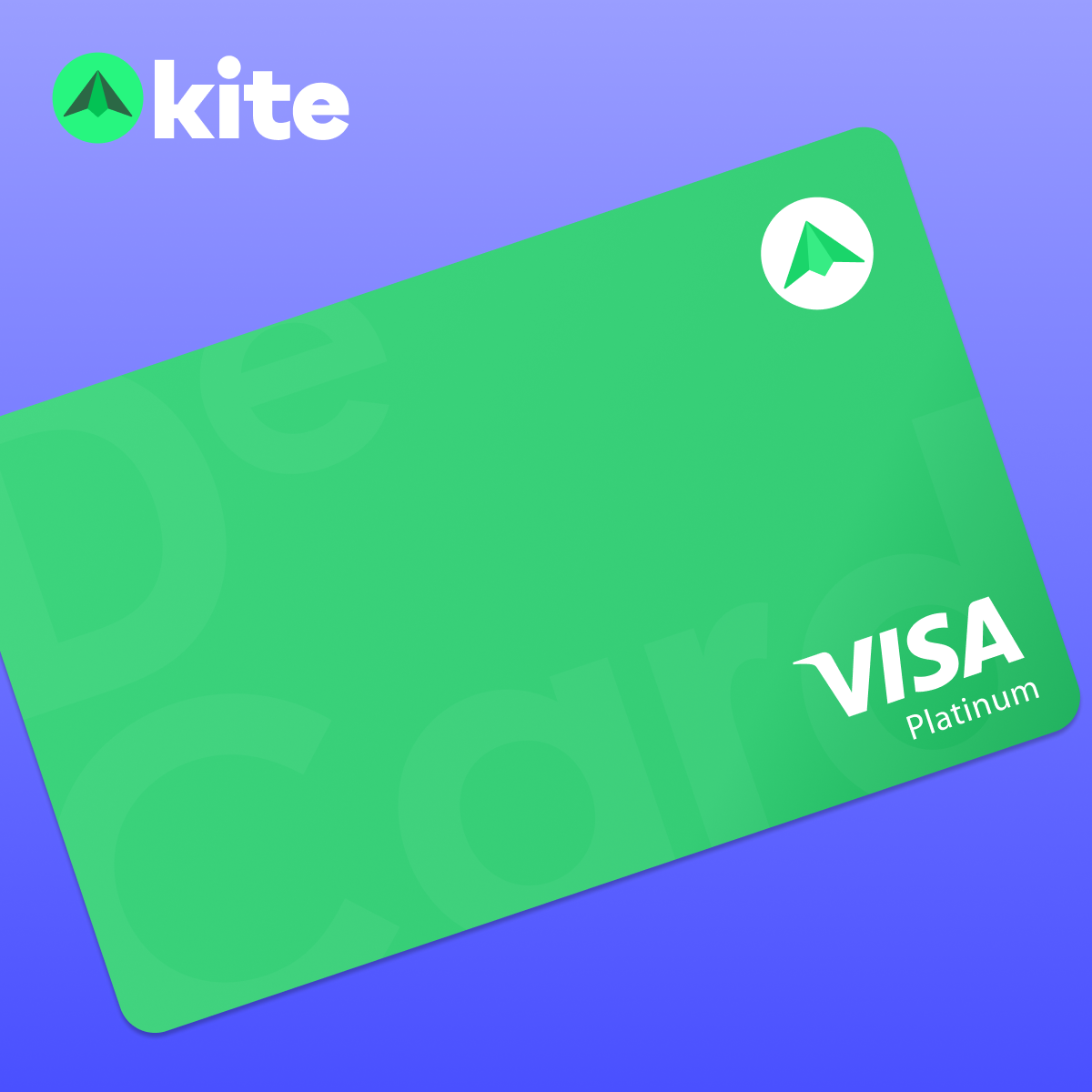
Our card is a virtual Visa funded from your stablecoin balance, and the balance it spends from is held in US dollars.
That's the whole mechanism. A $20 charge from a US merchant hits a USD balance, so there's nothing to convert and no FX fee to pay. Purchases in other currencies carry 1.8%, which is the honest number and it applies to your dinner in Bangkok rather than your Claude subscription.
Here's what it costs to run.
| Kite Stable Card | Fee |
|---|---|
| Annual fee | $0 |
| Virtual card issuance | $0 |
| Card replacement | $0 |
| USD purchases | No FX fee |
| Non-USD purchases | 1.8% |
| Top-up conversion | 0% |
Getting set up takes about as long as reading this section. Complete verification, open the Card tab, tap Get Card, and the virtual card is issued and active immediately. Add it to Google Pay if you want it on your phone, top it up with USDC or USDT, and save it at whichever checkouts bill you monthly.
Then use the controls, because this is where a prepaid card is genuinely better than a bank card for subscriptions. Set a spending limit that covers your stack with a little headroom. Keep the card balance separate from your main wallet balance, which it is by default, so a leaked card number exposes the float and not everything you own. Freeze it from the app the moment something looks wrong.
What to watch out for with recurring payments
Three things trip people up on any prepaid or virtual card, ours included.
Keep the balance ahead of the renewal date. A subscription that fails to charge doesn't retry politely forever. Services suspend accounts, and some make you resubscribe at current pricing rather than the rate you were grandfathered into.
Expect the occasional free trial to be fussy. Some merchants run a small authorisation hold to verify the card, and a few refuse cards they identify as prepaid for trials specifically. That's a merchant policy rather than a card fault, and it usually resolves once you're a paying customer.
Check the statement descriptor before you panic. The name on your transaction list is frequently the billing entity rather than the brand, so "DRI*Adobe" or a similar string is normal and not a duplicate charge.
Conclusion
The fix here is smaller than the problem looks. Pay dollars with dollars, and the three separate charges you've been absorbing collapse to none.
Go and open your last statement, find one recurring US charge, and work out what you actually paid against the sticker price. If the two numbers don't match, you've just found the amount you've been paying for the privilege of using the wrong currency, and it's the easiest thing on your entire budget to switch off.
Frequently asked questions
Can I use a virtual card for Netflix, Spotify or ChatGPT?
Yes, for the standard international versions of those services, which bill in USD or your local currency and accept Visa. A virtual card saves into the checkout exactly like a plastic one. Region-locked catalogues are a separate matter decided by your location rather than your card.
Will a US billing address make my foreign card work on a US-only service?
No. Services that restrict by geography check the country your card was issued in, which is encoded in the card number itself, not the address you enter. Entering a US address on a non-US card leaves the card's issuing country unchanged.
Is it legal to pay for US services from another country?
Paying a merchant that sells to you internationally is ordinary commerce. What isn't ordinary is misrepresenting your location to reach a service that isn't sold in your country, which usually breaches the terms you agreed to and risks the account. We'd stick to services that sell to you openly.
How much do foreign transaction fees actually cost?
Locally issued cards typically add around 3% in FX markup, and many banks charge a separate cross-border fee on top. On $960 of annual USD subscriptions that's about $28.80 before the cross-border fee, which is roughly one and a half months of an average subscription stack.
What is dynamic currency conversion and should I accept it?
DCC is when a checkout offers to charge you in your home currency instead of the merchant's. European consumer research found markups between 2.6% and 12%, averaging around 5%. Decline it and pay in the merchant's currency whenever you're given the choice.
Do I need a bank account to use the Kite card?
No. You fund the card from your USDC or USDT balance in the app rather than from a local bank, which is the point for anyone who's paid from abroad or lives somewhere their bank makes international payments difficult.
Which countries can get the Kite Stable card?
The full card experience is live in nine countries, and eligibility is based on your country of residence rather than where you currently are. Our countries page lists what's available in each of the 45 markets we serve.
Can I set a spending limit so a subscription cannot overcharge me?
Yes. You can set spending limits and freeze the card instantly from the app, which is a sensible default for a card saved across several recurring merchants. Because the card balance is held separately from your wallet balance, only the amount you've topped up is ever exposed.